 AI Engine
  FINANCE & ACCOUNTING AUTOMATION
 Finance Process Automation for P2P, O2C & R2R
Automate invoice processing, cash application and reconciliation with rules, APIs, RPA and AI where appropriate. Our finance automation approach connects procure-to-pay (P2P), order-to-cash (O2C) and record-to-report (R2R) workflows with validation and human approval.
Core Processes
P2P Invoicing, O2C Cash App & R2R Close
Workflow Coordination
APIs, RPA & Workflow Platforms
AI Where Appropriate
Document Extraction & AI-Assisted Fuzzy Matching
Finance RPA Implementation: Example Workflows
Our team's prior process experience spans P2P, O2C and R2R, including manufacturing invoice workflows, dispute analysis and chargebacks. The examples below illustrate possible designs, not AI Engine Stack client results. Technology, controls and integration feasibility are assessed for your systems.
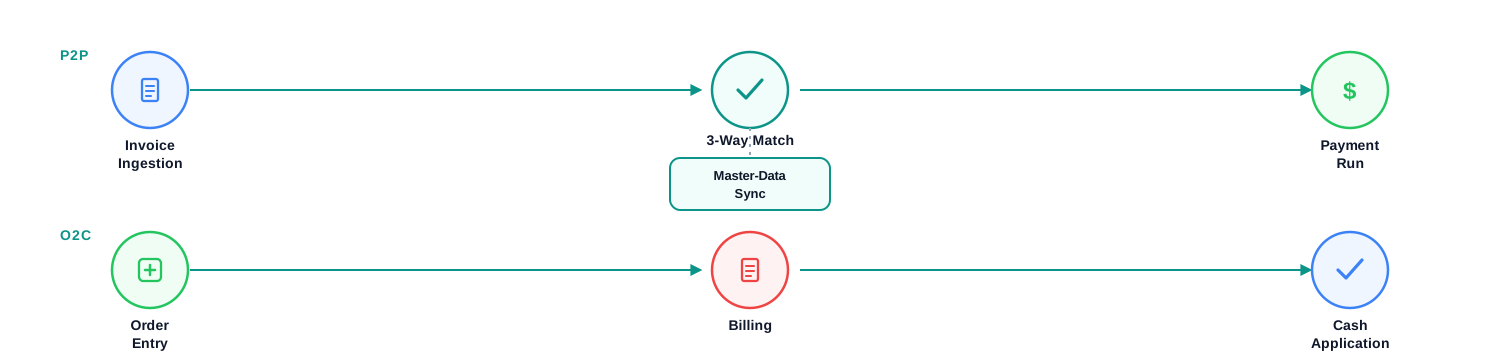
Accounts Payable Automation: PO & Non-PO Invoice Processing
Invoices ingested via email and vendor portals are extracted by a document AI model. PO invoices are routed through 3-way matching logic (PO vs. invoice vs. goods receipt); AI predicts GL account coding for non-PO invoices before a human sign-off gate.
Intake & Extraction
Ingests PDF/EDI invoices. Document AI extracts header, line items, taxes, and PO references.
3-Way Match & AI Coding
RPA performs 3-way match against ERP PO/goods-receipt records. For non-PO items, AI predicts GL & cost centers.
Human Review Gate
Non-PO approvals, price variance breaches, or short-shipment mismatches are routed to cost center leads.
ERP Posting & Payment
RPA posts approved invoices into the ERP and prepares disbursement proposals on payment run dates.
Accounts Receivable Automation: Cash Application & Remittance Matching
Processing lockbox files, bank statement feeds, and remittance emails. Matching rules identify clear allocations; fuzzy matching or AI can suggest candidates for ambiguous items, with validation and review before ERP posting.
Bank & Remittance Capture
RPA downloads bank statements; document AI extracts line details from unstructured remittance PDFs.
Candidate Matching
Matching rules and, where useful, AI suggest candidate allocations for short payments, unclear payer references and partial payments.
Deduction & Human Review
Unresolved discrepancies or short-payment deduction requests trigger a review task for AR specialists.
AR Clearing & Posting
After validation and required approvals, RPA posts cash allocations and updates open customer balances.
Record-to-Report Automation: GL Reconciliation & Financial Close
Automating month-end financial close and balance sheet reconciliations across general ledgers and sub-ledgers, including variance analysis. AI helps surface unmatched breaks, drafts variance explanations, and prepares journal entries for controller approval.
GL & Sub-Ledger Extraction
RPA extracts GL reports, trial balances, and sub-ledger details across banking and ERP systems.
Auto-Rec & AI Analytics
RPA executes 1:1 and 1:many matching rules. AI performs fuzzy analysis to identify residual break causes.
Variance Explanation & Review
AI drafts variance comments and adjustment journal entries; routes the binder to the Controller for review.
Journal Posting & Close
Upon sign-off, RPA posts closing journal entries to the ERP and logs the audit trail.
Designed to Fit Your Existing Finance Architecture
Connect process orchestration, intelligent document processing, AI-assisted matching and human review with your ERP. Where agentic AI implementation is useful for exception handling, assess tool permissions and approval boundaries before automated actions. Platform selection, system access and controls are assessed for your environment.
Finance Automation Delivery Framework
Click any stage below to see how the 6-stage Engine Stack Method applies specifically to finance engagements.
These are the finance-specific cuts of the full 6-stage Engine Stack Method. Browse every service across the lifecycle, or see how live bots are kept running with managed support.
Common Questions
Straight answers to what buyers usually ask before a first call.
Which ERP systems do you work with?
We assess integration with your existing ERP during discovery and design. Access, available APIs or application interfaces, financial controls and test environments determine the approach. The examples on this page do not represent a prebuilt integration for every ERP.
What happens in BLUEPRINT →Where does a human still approve?
Wherever judgment or approval authority is required. Non-PO approvals, price variance breaches and short-shipment mismatches route to cost centre leads; unresolved discrepancies and short-payment deductions route to AR specialists; drafted variance explanations and adjustment journal entries route to the Controller before anything posts.
How do you handle separation of duties and financial controls?
Control requirements, approval authority and separation of duties are reviewed during SCAN and GATE. Routing thresholds, review responsibilities and posting permissions are then defined during design and governance setup.
Can AI-assisted matching be trusted on financial data?
The example designs use matching rules for clear cases and AI where useful to suggest candidates for ambiguous items. Suggestions are validated, with human review and approval for judgments and adjustments before posting. AI output alone is not an approval to change financial records.
Where matching ends and judgment starts →Do you support month-end close, or only invoice processing?
Both. Record-to-report covers automated GL and sub-ledger reconciliation across banking and ERP systems, 1:1 and 1:many matching rules, AI-surfaced break analysis, drafted variance commentary and prepared journal entries for controller approval, with closing journals posted and the audit trail logged on sign-off.